
Büyük ve Ağır İş Parçaları İçin CNC Dikey Torna Tezgahı Nasıl Seçilir (3)
6. Evaluate Machine Rigidity
Rigidity is one of the most important characteristics of a heavy-duty CNC vertical lathe.
During heavy cutting, the cutting force is transferred through the tool, toolholder, ram, crossrail, column, machine base, and worktable.
If the structure lacks sufficient rigidity, several problems can occur:
· Chatter
· Tool vibration
· Poor surface finish
· Dimensional instability
· Reduced tool life
· Lower material removal rates
· Increased machining time
Therefore, buyers should examine the structural design rather than relying on marketing descriptions such as dddhhhheavy duty.dddhhh
Important questions include:
· How is the worktable supported?
· What guideway technology is used?
· What is the ram cross-section?
· How is the crossrail supported?
· What is the maximum cutting force?
· How is vibration controlled?
· What is the machine's total mass?
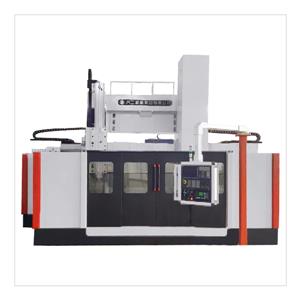
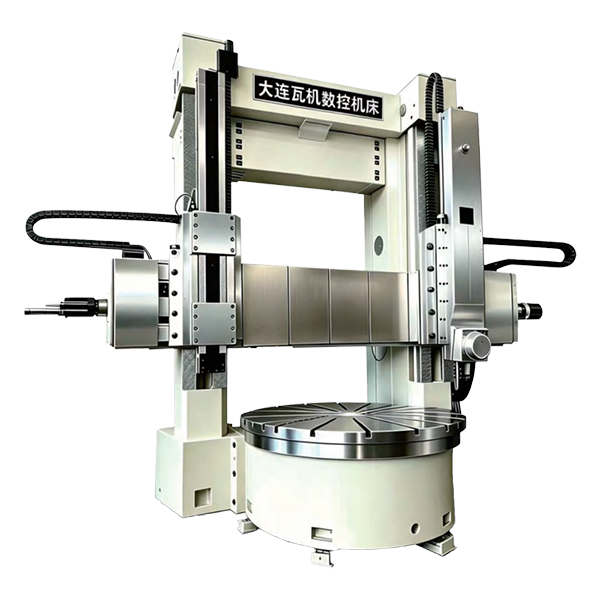
For example, Dalian Waji's published double-column vertical lathe specifications include ram dimensions, maximum cutting force, guideway configurations, crossrail travel, and machine weight. These parameters collectively provide a better picture of machine rigidity than any single specification.
For detailed product specifications, please click on the right: https://www.dlwjcnc.com/product/cnc-vertical-turning-and-machining-center-with-c-axis
7. Consider Guideway Design
Guideways directly influence positioning stability, load capacity, motion accuracy, and long-term performance.
Large vertical turning machines can use different guideway configurations depending on the machine architecture and application.
For heavy workpieces, buyers should pay particular attention to:
· Load capacity
· Friction characteristics
· Lubrication
· Thermal behavior
· Accuracy retention
· Maintenance requirements
Dalian Waji's large vertical lathe specifications include different guideway configurations, including slide and hydrostatic guideway arrangements depending on the machine configuration.
For demanding applications, a buyer should request technical documentation describing the guideway system rather than relying only on a general product description.
8. Spindle and Worktable Speed Range
High speed is not automatically better for heavy machining.
A large-diameter workpiece can require relatively low rotational speed because the cutting speed at the outside diameter can already be substantial.
Therefore, a good large CNC vertical lathe needs an appropriate speed range rather than simply the highest possible rpm.
Buyers should consider:
Minimum table speed
Maximum table speed
Number of speed ranges
Stepless speed control
Torque available at low speed
Motor characteristics
For heavy roughing, low-speed torque can be more important than maximum rotational speed.
For finishing, however, sufficient speed control can help optimize cutting conditions and surface quality.
9. Check Toolholder Travel
Tool travel determines whether the machine can actually reach all required machining surfaces.
Important parameters include:
Horizontal toolholder travel
Vertical toolholder travel
Crossrail travel
Rapid traverse speed
Feed range
Toolholder swiveling angle
For example, Dalian Waji's CNC Double Column Vertical Lathe configurations list horizontal toolholder strokes reaching approximately 1,400 mm and higher depending on the machine size, with vertical strokes available in several configurations.
These parameters should be compared against the actual geometry of your components.
10. CNC System Selection
The CNC system affects programming, operator interaction, machine integration, diagnostics, and production management.
Dalian Waji's large CNC vertical lathe configurations can be supplied with CNC systems including Siemens and FANUC options.
For international buyers, it is useful to consider:
· Existing CNC programming standards
· Operator experience
· Local technical support
· Spare parts availability
· Remote diagnostic capability
· Integration with factory systems
· Postprocessor compatibility
If your factory already operates FANUC or Siemens machines, using a familiar control platform can reduce training requirements.
11. Consider the Actual Cutting Force
For large components, maximum cutting force is an important engineering parameter.
Heavy turning operations can generate significant radial and tangential forces. If the toolholder, ram, or structural system cannot adequately resist these forces, vibration and dimensional errors may result.
The buyer should compare the required cutting force with the machine's rated cutting force.
For Dalian Waji's CNC Double Column Vertical Lathe, published configurations include maximum cutting force specifications for both left and right toolholders.
This information can help engineers determine whether a machine is appropriate for roughing operations.